
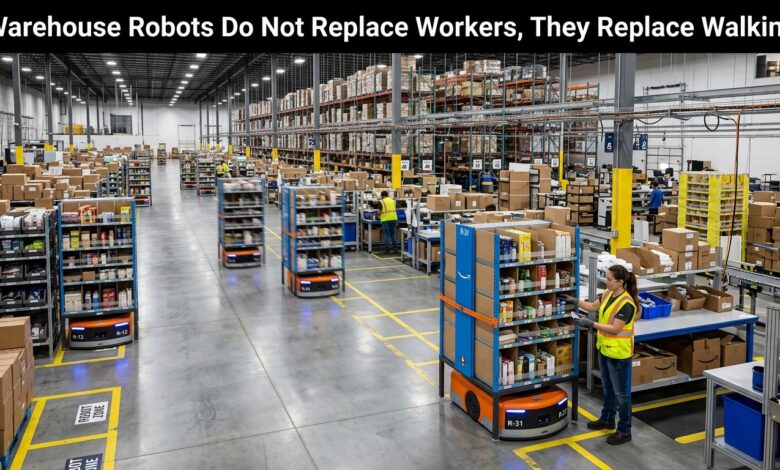
The economics of warehouse automation come from eliminating travel time, not headcount. Understanding that explains which deployments succeed and which…
Read More »Robotics & Automation

Robots work alongside people, and safety is not a feature to add later — it is a fundamental design requirement…
Read More »
Training robots in the real world is slow, expensive, and risky, and simulation lets robots learn at scale in virtual…
Read More »
Collaborative robots, or cobots, are designed to work alongside people rather than replace them, and they are opening up automation…
Read More »
A robot that cannot sense its surroundings cannot act safely or effectively, and perception — using sensors to understand the…
Read More »
A robot that can only move, or only manipulate, is limited, and mobile manipulators — robots that combine movement with…
Read More »
Picking up and manipulating objects is deceptively hard for robots — objects vary in shape, weight, and fragility — and…
Read More »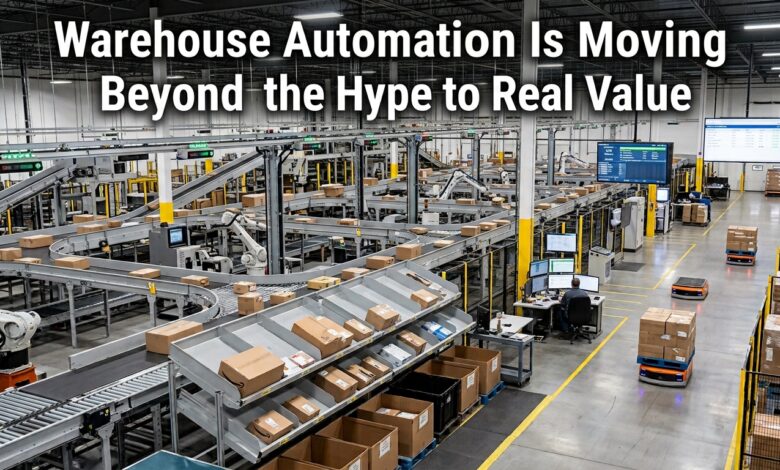
Warehouses are being transformed by robots, and warehouse automation is moving beyond the hype to real value, as robots handle…
Read More »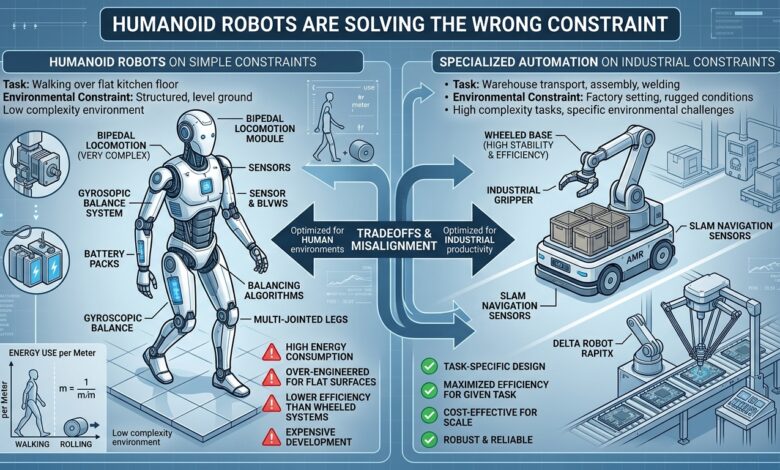
The human form is a compromise evolved for a general-purpose organism. Copying it in a machine inherits the compromises without…
Read More »